The Top 5 Ergonomic Mistakes Dentists Make (And Simple Fixes for Each)
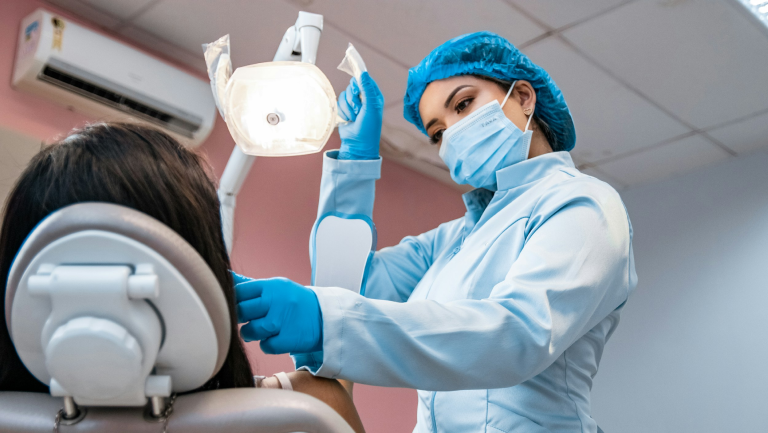
Dental work is physically demanding in ways that are easy to dismiss. A neck lean here, a torso twist there, a stool set too low for one more procedure. None of it feels serious in the moment. Over a career, it becomes one of the leading causes of musculoskeletal disorders in any healthcare profession. Ergonomic risk factors are present in every dental practice. The good news is that most ergonomic mistakes in dentistry share something in common: they are fixable with small, deliberate adjustments.
Mistake 1: Excessive Leaning and Forward Head Posture
Craning the neck forward to see inside the oral cavity is one of the most common habits in clinical practice. Dental hygienists and dental clinicians are especially vulnerable to this pattern. A neck flex of just 30 degrees places more than 40 pounds of force on the cervical spine, leading to upper back pain and accelerated disc degeneration when repeated every day.
The fix is two-part. First, use proper magnification loupes and head-mounted lighting, so the eyes do not have to do the work the body compensates for. Second, bring the patient to you. A fully reclined patient in a properly supported supine position reduces the need to lean in at all. Indirect vision with a dental mirror does the rest.
Mistake 2: Torso Twisting and Rotation
Reaching for dental tools, glancing at monitors, and turning toward assistants seem like minor movements. Done dozens of times across a procedure, these repetitive motions create muscle imbalances and cumulative stress on the lumbar spine that adds up over a full schedule. Left unaddressed, this pattern is a documented contributor to rotator cuff injuries in dental professionals.
The fix is operatory layout. All frequently used instruments should fall within a 14-16 inch working radius. When repositioning is needed, move the entire stool rather than rotating the torso. Symmetrical posture, maintained throughout the procedure, protects the spine in a way that reactive stretching cannot.
Mistake 3: Adjusting Your Body to Fit the Patient
This mistake is common, costly, and entirely avoidable. When dental practitioners adjust their own posture to accommodate a patient’s position, they absorb the strain that proper patient-positioning techniques eliminate.
The fix starts with the dental chair. Place patients in a full supine position and use head positioning to align the oral cavity with the provider’s neutral, upright posture. Ask the patient to tilt their chin or turn their head rather than leaning in to meet them.
This is where ergonomically designed equipment makes a significant difference. Dental ergonomic cushions, including a headrest that guides the patient’s head into the correct treatment angle, a backrest that eliminates the lumbar gap, and a knee support that stabilizes the lower body, all work together to hold the patient in a position that supports the provider’s posture.
Mistake 4: Poor Operator Stool Setup
Workstation adjustments in treatment rooms are often overlooked, and stool setup is where the ergonomic process breaks down most frequently. Perching on the edge of a stool, letting feet dangle, or setting the seat too low forces the provider to lean forward. This affects wrist angle and strains the lower back.
A useful reference point is the 90-90-90 rule: hips at 90 degrees to the torso, knees bent at 90 degrees with feet flat on the floor, and elbows resting at 90 degrees while working. Research supports a thigh-to-shank angle of 105 to 110 degrees or greater for ergonomic positioning at the dental chair specifically. The stool’s lumbar support should actively engage the natural curve of the spine. A back that forms a C-shape during treatment is absorbing strain that proper setup would prevent.
Mistake 5: Static Posture Held Too Long
Holding the same position throughout a long appointment cuts off circulation and keeps the muscles across the neck and shoulders locked in a constant state of tension. For the dental team, static posture held across long appointments is a primary contributor to lower back pain, musculoskeletal pain, and carpal tunnel syndrome linked to sustained grip and fixed wrist positions.
The fix is movement. Stand during injections. Reset posture between patients. Stretch the neck, wrists, and shoulders during transitions. Alternating between sitting and standing positions reduces the muscle strain that accumulates in any single posture.
Ergonomics Is More Than A Single Adjustment
Ergonomics is an ongoing positioning process that affects how every dental practitioner sets up treatment rooms. Dental office design, dental equipment selection, and training that begins in dental schools all determine how well a practice protects the people working in it.
Each of these fixes addresses one source of strain. Together, they form a clinical approach that protects the provider throughout their entire career. Patient positioning is where that protection starts. When the patient is correctly supported by ergonomically designed dental equipment and dental ergonomic cushions, the provider does not have to compensate. Crescent dental chair accessories are designed around that principle. See how Crescent supports better positioning.