The Complete Guide to Dental Patient Positioning for Long Procedures
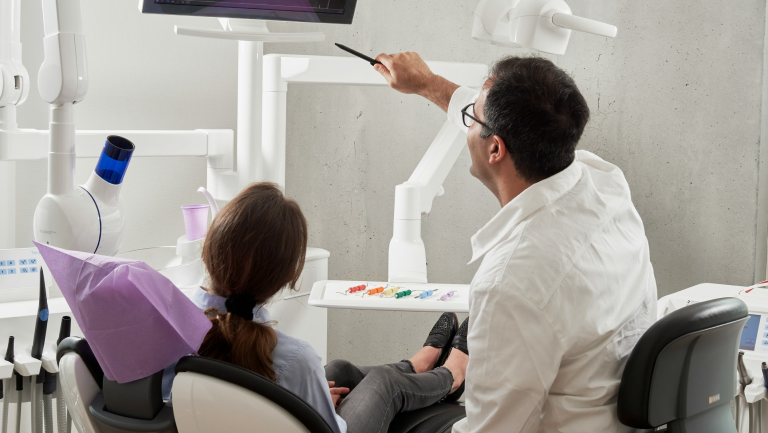
Most dental appointments are over quickly. A routine cleaning, filling, or even a simple extraction each takes about 60 minutes in the chair, and the patient is on their way. Longer procedures are a different story.
More complex procedures require more time in the dental chair. Root canal appointments typically run up to 90 minutes and longer in more complex cases. Full arch implant procedures can run up to 2 to 4 hours per arch.
At those durations, physical support is a clinical variable that affects successful treatment and keeps appointments running on time.
Why Long Procedures Require a Different Approach
For dental professionals, patient comfort is critical to providing safe treatment during long procedures. Standard dental chairs are designed to recline patients. Supporting them requires dental chair accessories that comfortably hold patient positions.
When a body lacks support, the muscles responsible for holding positions do the work instead. Sustained muscle engagement leads to tension, fatigue, and constant movement. The patient begins shifting weight, repositioning legs, or lifting the head, to regain physical comfort.
Each shift changes the patient’s position relative to the provider. Each repositioning episode costs time and requires the provider to re-establish both access and posture. In dental procedures requiring sustained precision, including implant placement, therapeutic procedures, and routine oral health examinations, those interruptions disrupt treatment.
Proper positioning eliminates the source of movement before it starts. A patient whose body is fully supported from head to knee stays settled throughout every procedure.
The Pressure Points That Drive Patient Movement
Patient movement during long dental procedures traces back to four physical sources.
- The lower back gap. Most dental chairs leave the lumbar spine unsupported. In fully reclined patients, an unsupported lower back can restrict respiratory function, adding physical tension that compounds over a long appointment. Past the 30-minute mark, that effort becomes noticeable. Past 60, it becomes painful, triggering shifts that travel upward and alter head and jaw position.
- Leg and hip pressure. Unsupported legs create a pull through the hips and into the lower back. As pressure accumulates, patients reposition their legs. The movement travels upward, shifting the torso and changing the provider’s access angle. Ergonomic padding and proper knee elevation directly counter this pattern.
- Head and neck position. Standard head supports hold the head in place without putting it in a clinically useful position. As the neck fatigues, patients lift or turn their heads. For upper arch work, even small deviations require the dental surgeon to compensate for posture. Correct chin alignment starts with the headrest.
- Concentrated pressure points. Standard upholstery concentrates pressure on the tailbone, shoulder blades, and heels. In extended procedures, this discomfort can compromise patient compliance and risk pressure sores and even pressure injuries at bony contact points.
Ergonomics Starts With the Patient
Provider ergonomics gets significant attention in dentistry, and for good reason. What gets less attention is how directly patient positioning drives it. When a patient is unstable, the provider compensates. When a patient is well-supported, the provider can hold a neutral, ergonomic posture from the first minute of treatment to the last.
Repetitive strain injuries are a documented occupational hazard in dental careers. Every time a patient shifts, the provider adjusts: a shift in wrist angle, a lean to re-establish access, a change in shoulder position. Whether the procedure involves orthodontic treatment, correction of bite problems, or implant surgery, height modifications to the chair setup affect how long both patient and provider can sustain position comfortably. Done repeatedly across a 90-minute procedure; those adjustments load the neck, shoulders, and lower back in ways that add up across a career. A stable patient removes the need for those adjustments entirely.
A Complete Positioning System
The Crescent Signature Bodyrest System integrates four components designed to work together: a full-length chair pad, headrest, backrest, and knee support. Each addresses a specific source of instability.
Viscoelastic memory foam conforms to each patient’s shape, distributing weight evenly, and eliminating pressure concentrations that trigger movement.
Fills the natural lumbar gap, cushioning and supporting the spine throughout the procedure. When that gap is bridged, the lower back muscles fully release, and the torso settles into a consistent position.
Elevates and supports the legs, altering the hip angle to release pressure through the lower back and hips. Stabilizing the knees keeps everything above them relaxed.
Guides the patient’s head into the optimal treatment angle, tilted back so the jaw opens forward naturally, and the upper arch comes into correct alignment. For practices using reclining backrests with double-articulating headrests, the Low-Profile Headrest eliminates the occipital pressure point that causes patients to resist a fully reclined position.
Ergonomic accessories fit directly into your existing chair with zero modifications and still address the most overlooked source of provider strain: an unsupported patient. All components are covered in medical-grade vinyl, easy to disinfect between patients, and available in six colors to match your practice.
A well-positioned patient is the starting point for every long procedure that runs smoothly. The Crescent Bodyrest System is an investment in both successful oral health outcomes and patient comfort.