How Does Knee Support Fit Into a Dental Ergonomics Strategy?
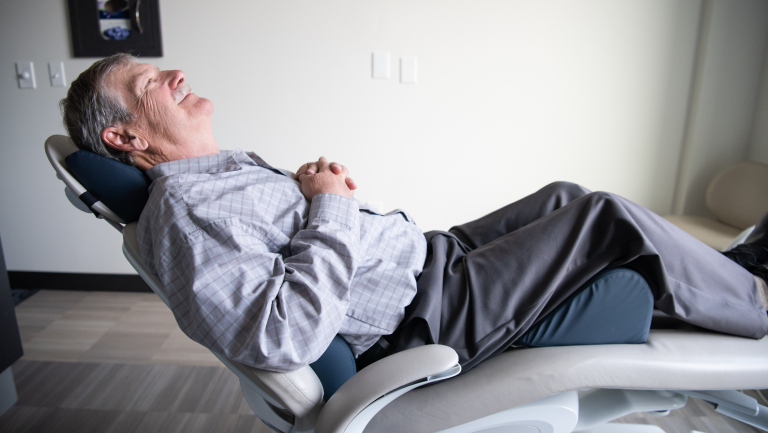
Dental chairs are designed to recline. Keeping patients comfortable and supported throughout a procedure is where dental chair accessories come into play. When a patient lies flat with legs fully extended, the lumbar spine begins to strain without proper knee support. Uncomfortable patients move and adjust, which disrupts treatment.
Proper knee support improves every appointment for both the patient and the provider.
What Happens Without Knee Support
A flat, unsupported position places continuous tension on the lower back and hips. The body compensates by shifting and readjusting. From the patient’s perspective, this feels like mild discomfort. From the provider’s perspective, this movement quickly becomes a challenge.
Every mid-procedure adjustment requires the dental team to reposition and re-establish access. Patients who shift out of position force providers to compensate in ways that strain their neck and shoulders. For dental professionals who repeat these compensations daily, those adjustments become one of the most common risk factors for musculoskeletal disorders. When a patient cannot stay still, it usually means that they are not properly supported in the dental chair.
How Knee Support Alleviates Back Pain
Elevating the knees slightly changes the shape of the entire lower body. The hip flexors release, allowing the lumbar spine to decompress. The body settles into a position that feels more natural and comfortable.
The result benefits both patient and provider:
- Lower Back and Hip Pressure Relief: lying completely flat on a dental chair strains the lumbar spine. Elevating the knees helps decompress the lower back and hips, making long appointments significantly more comfortable for patients who would otherwise struggle to stay reclined.
- Patient Stabilization: a supported patient remains still during treatment. Knee support prevents the gradual downward slide that pulls patients out of position during longer procedures and eliminates the need for mid-procedure re-adjustments that interrupt treatment.
- Reduced Dental Anxiety: physical discomfort is one of the most consistent drivers of dental anxiety. When the patient feels settled and secure, the result is a calmer nervous system. They are more cooperative, more relaxed, and more likely to return for future care.
- Improved Circulation: lifting the knees promotes blood flow through the lower legs and prevents the numbness patients often report after extended time in the chair, a small detail that contributes meaningfully to the overall experience.
Knee Support, Provider Ergonomics, and the Dental Team
Musculoskeletal pain is one of the most significant occupational health challenges facing dental professionals. Dentists and dental hygienists perform repetitive motions in sustained, fixed positions throughout the workday. A 2018 study of dental professionals in Western countries found that 58.5% had neck pain, 56.4% had lower back pain, and 43.1% had shoulder pain.
Patient positioning directly affects provider ergonomics. When a patient is squirming or has shifted out of position, the provider adjusts. That means leaning in further, rotating the torso, or repositioning entirely, all of which add cumulative strain through repetitive movements that compound over a career. Ergonomic strategies that focus only on workstation adjustments and operator stool setup address only part of the problem. The work environment in the dental operatory includes the patient, and how the patient is positioned determines how much the provider has to compensate.
Knee support stabilizes the patient and keeps them well positioned for effective treatment. A patient who stays in position allows the provider to maintain neutral ergonomic positioning throughout the procedure.
Knee Support Designed to Work as a System
Crescent Dental Chair Knee Supports are designed to be used alongside the Crescent Backrest, Chair Pad, and Headrest as part of the complete Crescent Bodyrest System. Each component addresses a specific point of physical strain. Together, they hold the patient in a fully supported position from head to knee, keeping the body relaxed, the spine decompressed, and the provider’s access unobstructed. The Bodyrest System was developed in collaboration with Bethany Valachi, PT, MS, CEAS, a leading dental ergonomics expert and founder of Posturedontics, whose research focuses on preventing the chronic pain and injuries that accumulate from poor positioning over a practitioner’s career.
Crescent Knee Supports are made with medical-grade memory foam and covered in vinyl that wipes clean with common disinfectants. They fit standard dental chairs without modification and come in six colors to complement your practice.
Comfort Supports Stability And Care
Proper patient positioning is the foundation of every successful procedure. When patients feel physically supported, they stay still and health care professionals on the dental team can work without adjusting their own posture to compensate. The result is better access, smoother procedures, and less provider strain across the schedule.
Knee support is an important part of what makes every appointment run smoothly from the start.
Explore the Crescent Patient Positioning Guide.