Treating Patients with Limited Mobility: How Ergonomic Accessories Improve Safety and Access
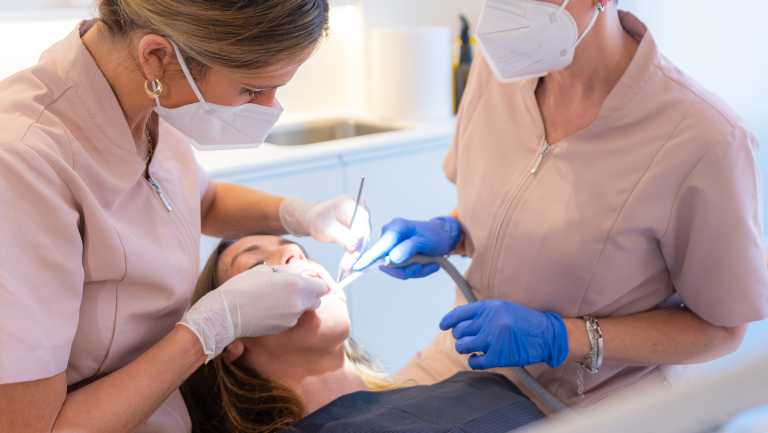
According to the U.S. Census Bureau, about 45.8 million Americans, or 13.7% of the population (roughly 1 in 7 people), reported a physical disability in 2024 and self-reported difficulty with walking or climbing stairs, hearing, vision, self-care, cognition, or independent living. That’s a significant share of the patients already in your dental practice.
For a patient with limited mobility, reclining in a standard dental chair may feel impossible. Without proper support, the chair can cause discomfort and instability, leading to tension, fidgeting, and dental anxiety. Oral health care and safety go hand in hand, and to provide proper care, maintaining a stable position is critical.
Start With the Person, Not the Procedure
The National Institute of Dental and Craniofacial Research outlines a practical approach to providing dental care for patients with disabilities, and most of the tips are likely already in your wheelhouse.
- Facilitate a person-centered environment grounded in respect and dignity
- Discuss how medical conditions and abilities might affect care
- Prepare the entire dental team and observe how the patient moves, paying special attention to how they settle into a chair
That last point is where positioning becomes a strategy. A patient who can’t settle comfortably will move throughout the appointment, compromising precision, safety, and procedure duration. In RDH Magazine, practicing dental hygienists cite positioning devices, such as knee bolsters and wedge pillows, as a direct way to keep patients with disabilities comfortable and upright. Physical stability is integral to accessible dental care.
Getting Into the Chair Is Part of the Treatment Plan
Positioning considerations begin before dental appointments. The Americans with Disabilities Act accessibility guidelines require dental offices to be wheelchair accessible. As Decisions in Dentistry notes, many patients with special needs require a caregiver’s help to get into your dental chair. Manual transfers can pose risks to patients and staff, so alternatives include adapting the wheelchair to function like a dental chair or using the patient’s assistive devices to perform the procedure while the patient remains seated. The goal is a stable, well-supported patient.
The Right Support Goes a Long Way
Comfort starts before treatment. An unsupported body meets the chair’s rigid surfaces at every point of contact, prompting patients, especially those with limited mobility, to shift, tense, or grip the armrests. For dental professionals, this instability reduces treatment efficiency and can heighten dental anxiety even before care begins.
The Crescent Dental Chair Headrests and Neck Pillows address head and jaw discomfort. Each headrest is a memory-foam pillow that supports the patient’s neck as they recline, with a slope that lets the head gently tilt back and the jaw naturally rotate into an open-forward position. The ergonomic design gives the patient a stable resting point, spares the operator from postures that contribute to musculoskeletal disorders over a career, and helps the patient relax comfortably.
Crescent offers three headrest options with customizable support:
Support The Body, Not Just the Head
For a patient to feel fully supported, the rest of their body needs to be just as relaxed as their head and neck.
The memory-foam Bodyrest Dental Chair Pad conforms to the patient’s body and fills the gaps between the patient and a rigid dental chair. This pressure-relieving cushion distributes weight across the full surface rather than concentrating it at a few points, relieving pressure on areas that make extended reclining difficult for patients with mobility limitations.
When combined with the Backrest and Knee Support, the chair pad becomes part of a complete system. The backrest fills the lumbar gap that most chairs leave open, and the knee support stabilizes leg position and hip angle, reducing compensatory movements that show up as fidgeting during procedures. Together, the four components complete the Crescent Bodyrest System.
A physically stable patient needs fewer interruptions and gives the operator consistent access, improving treatment efficiency and patient satisfaction. All Crescent products use medical-grade materials and wipe clean with common disinfectants, so infection control doesn’t require specialized dental equipment.
Comfort Supports Access and Care
Treating patients with limited mobility begins with person-centered care tailored to each individual’s needs. Proper head, neck, and body support, along with attention to patient comfort, removes barriers that make treatment more difficult for both patients and providers. A small investment for dental practices and dental care providers pays off at every appointment.
Explore the Crescent Patient Positioning Guide to build a positioning setup that works for every patient who sits in your chair.