The ROI of Ergonomic Dental Chair Accessories for Busy Practices
We often hear the phrase “it’s just the cost of doing business.” For dental practitioners, that cost can include years of physical therapy or even early retirement.
Bethany Valachi, PT, DPT, MS, CEAS, recalls the toughest decision her husband faced in his dental career. Should he sell his practice or learn to live with severe lower-back pain? He was only 35. Valachi identified the cause in his physical work environment and became a certified ergonomic assessment specialist to address the problem at its source. Ergonomics adjusts the job to the worker, and that shift changed the outcome.
The U.S. Bureau of Labor Statistics defines musculoskeletal disorders, often called ergonomic injuries, as the pain and damage that build up when the body repeats tasks or holds awkward positions over time.
Valachi’s story reflects a pattern across the profession. An analysis of dental professionals in Western countries found that musculoskeletal pain ranged from 10.8% to 97.9% across studies, with the neck (58.5%) and lower back (56.4%) most commonly affected.
Crescent worked directly with Valachi to develop a solution based on that research.
The Cost of Ignoring Provider Ergonomics
Musculoskeletal strain builds slowly, accumulating with each micromovement that twists the body into an awkward position during dental procedures. Years of twisting and bending accumulate into pain that becomes harder to work through.
Workers’ compensation claims tied to musculoskeletal disorders, including back pain and repetitive motion injuries, are estimated to cost between $13 billion and $20 billion annually. Within a practice, losing an experienced hygienist to chronic pain can cost tens of thousands of dollars in lost production and recruitment, while retaining that hygienist through better working conditions and ergonomic supports costs a fraction of that each year. Broader research supports this: benefit-to-cost ratios for ergonomic interventions have ranged from 2:1 to 10:1, meaning every dollar invested can return two to ten dollars in savings.
Ergonomics Starts With The Patient Chair
Most dentists first consider their dental chair from a patient’s perspective. Valachi’s research points to a different starting point. The dental chair is also the provider’s primary tool, and its accessories determine whether the provider leans and strains to reach the oral cavity or works from a supported, neutral posture throughout the day.
Since 1997, Crescent has manufactured full dental chair Bodyrest Systems, and we remain the industry’s only manufacturer of a complete system. Every component is produced in the USA and covered with medical-grade upholstery. Our Low-Profile Headrest was co-developed with Valachi and is designed to position the patient’s head so the occlusal plane is 20 to 25 degrees behind vertical, keeping the operator upright and preventing hunching.
Support for Every Point of Contact
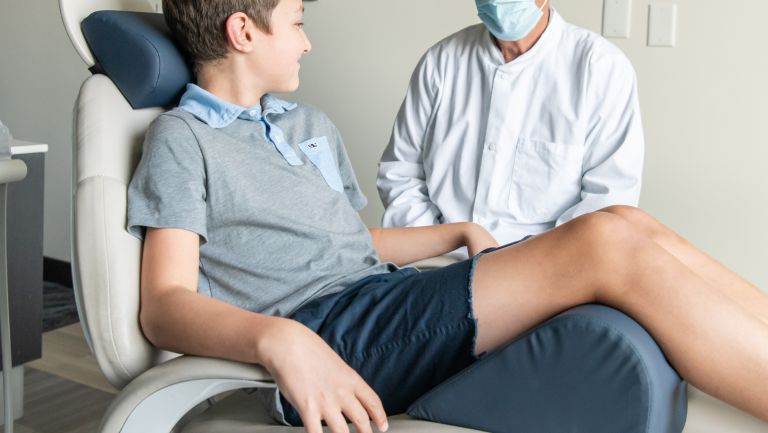
The complete Crescent Bodyrest System consists of four memory-foam components that work together to align patients for maximum comfort and optimal ergonomic positioning, reducing strain for you and your hygienists. Each support uses memory-foam upholstery, allowing patients to settle into a supported position.
Patient Comfort Protects Providers
Medical research consistently shows that musculoskeletal strain among dental providers is common and costly. Ergonomic accessories address the root cause of these symptoms, support patient comfort during dental procedures, protect providers’ careers, and reduce medical expenses associated with untreated physical strain.
Shop Crescent’s ergonomic products today to see the difference proper positioning makes for dental practices.